Shuri Castle: Diplomacy, Spirituality & the Soul of the Ryukyu Kingdom
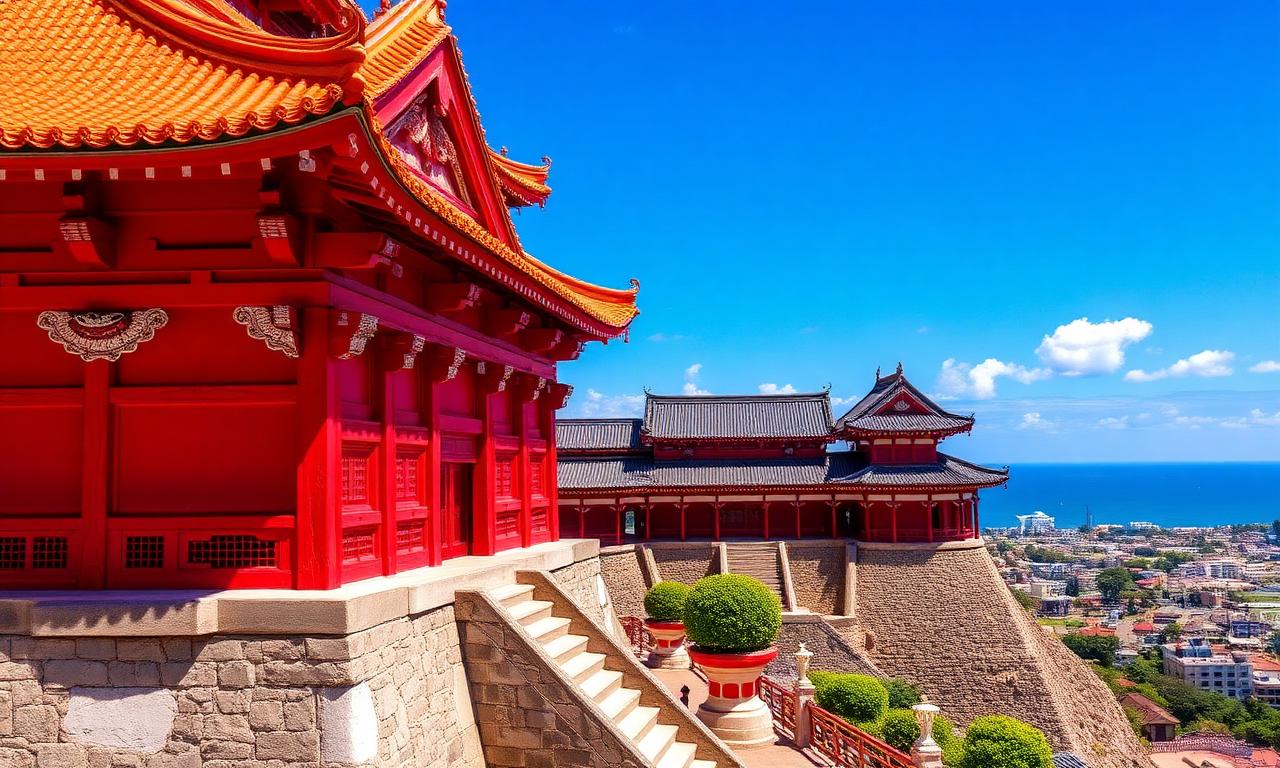
🟥 Royal Heart of the Ryukyu Kingdom
Shuri Castle was the political and ceremonial center of the Ryukyu Kingdom for about 450 years. Unlike mainland Japanese castles built for warfare, this one emphasizes diplomacy, culture, and trade. Its bright vermilion color reflects strong influence from China and Southeast Asia, showing Okinawa as a bridge between cultures.
This castle represents power through relationship rather than domination…a kingdom that thrived by connecting worlds rather than conquering them.
🏯 Seiden (Main Hall) — Symbol of Hybrid Identity
The Seiden served as the royal throne hall where kings conducted diplomacy. Architectural details mix Chinese symmetry, Japanese layout, and local Ryukyuan craftsmanship. Dragon columns symbolize royal authority and cosmic balance.
Shuri Castle embodies identity…Okinawa’s culture developed not by isolation but by absorbing and harmonizing multiple influences.
⛰️ Hilltop Setting — Harmony with Landscape
Built on a ridge overlooking Naha, the castle commands views of sea and land. The curved limestone walls reflect traditional Ryukyuan masonry. The site emphasizes balance between human authority and nature.
Power is not separate from nature — the ruler is situated within the landscape, not above it.
🔥 Destruction and Rebirth — Resilience of Culture
The castle was destroyed in the Battle of Okinawa (1945) and again by fire in 2019. Each time, it has been rebuilt through public support and cultural commitment.
Shuri Castle represents impermanence and renewal — culture survives not in buildings, but in collective memory and effort.
🚪 Shureimon Gate — “Gate of Courtesy”
One of the most famous symbols of Okinawa (it appears on the former ¥2000 note), the inscription translates roughly to “Land of Propriety.” It marks entry into the royal domain.
The kingdom defined itself through courtesy and diplomacy, not military might.
🟨 Una Plaza — Ceremonial Courtyard
A large open space in front of the main hall, the Una Plaza was used for royal ceremonies, diplomacy, and formal gatherings. Officials stood in strict hierarchical positions.
The space reflects order, harmony, and social balance — society functioning like a carefully arranged ritual.
⛩️ Sonohyan-utaki Stone Gate — Sacred Spiritual Site
A sacred prayer site just outside the castle walls, kings stopped here to pray before journeys. It blends indigenous Ryukyuan spirituality with royal authority.
Leadership was spiritually grounded — rulers sought harmony with unseen forces before acting.
🧱 Ryukyuan Limestone Walls — Flowing Defenses
The distinctive curved walls are unlike rigid Japanese castle designs. Built from local coral limestone, they follow the natural shape of the hill.
Defense through adaptation, not rigidity — strength comes from flowing with nature.
👑 Tamaudun Royal Mausoleum (Nearby, Highly Recommended)
The royal tomb of the Ryukyu kings is a short walk from the castle. Massive stone chambers and a sacred layout connect political authority to ancestor worship.
The kingdom’s legitimacy rested on continuity with ancestors, past and present united.
🎤 Walking the Castle — Most Salient Flow
Shureimon Gate → diplomacy and courtesy. Sacred prayer site (Sonohyan-utaki) → spiritual grounding. Una Plaza → order and ceremony. Seiden Main Hall → cultural synthesis. Stone walls & hilltop → harmony with nature. Tamaudun tomb → connection to ancestors.
Shuri Castle represents balance: diplomacy, spirituality, nature, and continuity.
“Shuri Castle is less a fortress and more a statement — a kingdom that ruled through diplomacy, trade, and cultural exchange. Its red halls tell the story of Okinawa as a crossroads of Asia, and its repeated destruction and rebuilding remind us that culture is resilient. The true strength of the Ryukyu Kingdom was not military power, but the ability to connect worlds.”