Exploring Nikkō Tōshō-gū: Monkeys, Cats & Golden Gates
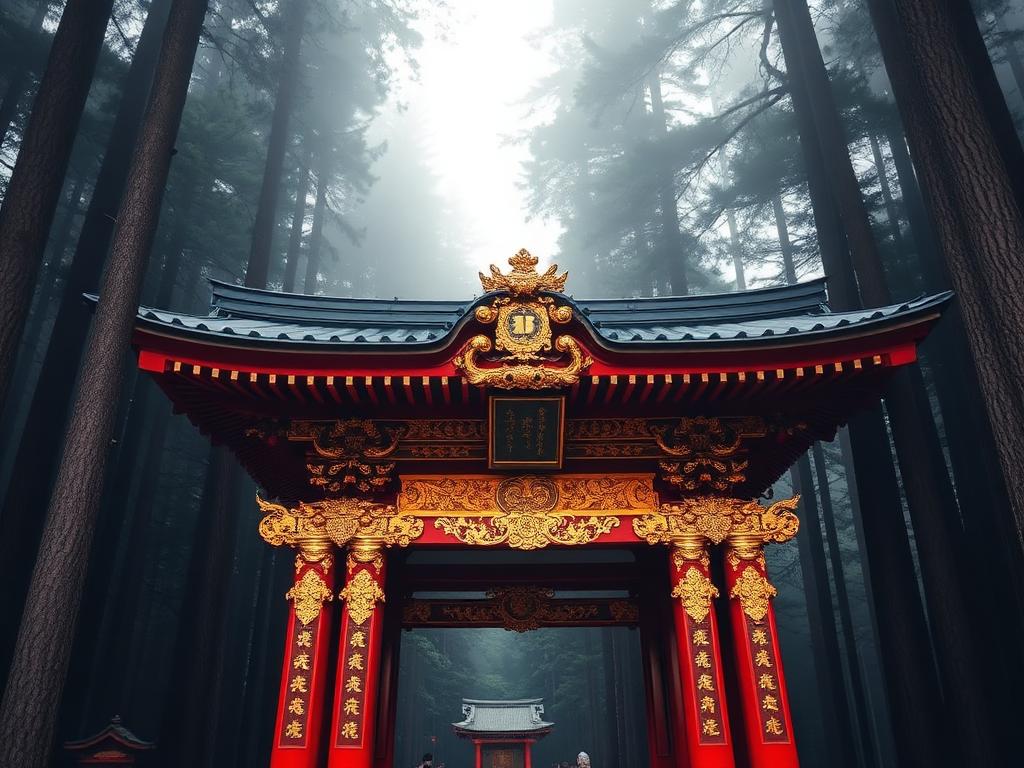
🌲
We’re visiting one of Japan’s most ornate and important shrines, dedicated to Tokugawa Ieyasu, the founder of the Tokugawa shogunate. Unlike many shrines that are simple and minimalist, this one is famous for its elaborate carvings, gold leaf, and vivid colors. It was completed in 1617 and later expanded by Ieyasu’s grandson to show the power and prestige of the Tokugawa family.
🌏 Harmony After Chaos — The Vision of Tokugawa Ieyasu
The shrine was built after Japan entered a long period of peace known as the Edo period. Its ornate decoration contrasts with Zen simplicity and communicates stability, prosperity, and cosmic order.
Philosophically, it reflects a blend of Shinto reverence for nature, Buddhist spirituality, and Confucian ethics about social harmony and hierarchy. This shrine is less about religion alone and more about a worldview…that society works best when nature, morality, and authority are in balance.
⛩️ The Torii Gate — Crossing Into the Sacred
The torii marks the transition from the everyday world into sacred space. Passing beneath it symbolizes leaving the ordinary and entering a spiritual landscape. It’s a moment of quiet awareness — a mental reset before approaching the shrine.
When we pass under the torii, we symbolically step into a different world — one shaped by nature, memory, and reverence.
🏯 The Five-Story Pagoda (Goju-no-tō) — The Universe in Balance
The Goju-no-tō represents the five elements of Buddhist cosmology: Earth, Water, Fire, Wind, and Void (or spirit). Each level symbolizes one element, stacked in harmonious balance.
Architecturally, the central pillar allows the structure to flex and each level move independently during earthquakes, reflecting harmony with natural forces. Philosophically, it expresses the idea that the universe — and human life — is composed of interconnected elements.
The pagoda is like a vertical model of the universe — reminding us that stability comes from balancing all elements of life.
🐒 The Three Monkeys — A Philosophy of Human Development
One of the most famous carvings here shows the “see no evil, hear no evil, speak no evil” monkeys. They originally symbolized protecting children from evil influences during childhood. You’ll notice they are part of a whole story carved along the stable building…a narrative told in wood that has captivated visitors for over four centuries.
The famous monkeys are often misunderstood as “ignore evil.” In context, they represent stages of life, especially childhood innocence. The message is closer to: children should be protected from harmful influences, and moral awareness develops gradually. Philosophically this connects to Confucian education…virtue is learned through proper guidance.
Rather than denial, the monkeys reflect the idea that wisdom grows over time — morality is cultivated, not assumed.
🐒 Moral Lessons in the Carvings
The carvings throughout the shrine reflect Confucian ideas about ethical development. The famous monkeys represent stages of life and moral education. The message: harmony in society begins with cultivating character.
😺 The Sleeping Cat — Peace as an Achievement
Another famous detail is the Sleeping Cat (Nemuri-neko) above a doorway. It symbolizes tranquility born from order. Behind it are sparrows — normally prey — living safely. This reflects a philosophical ideal: true power creates harmony, not fear.
It’s a subtle political message: under Tokugawa rule, society was calm enough for natural enemies to coexist. Peace here isn’t just quiet…it’s the idea that when society is well-ordered, even natural conflict softens.
😺 Peace and Harmony
The sleeping cat symbolizes tranquility achieved after conflict. Sparrows behind it suggest natural enemies coexisting peacefully. It’s a metaphor for a well-ordered society.
✨ Yōmei-mon Gate
This gate is often called the “Gate of Sunlight” and is covered with hundreds of carvings. It’s said you could look at it all day and never see the same detail twice. Many carvings depict Chinese sages, mythical creatures, and moral lessons…each one is a masterpiece in miniature.
🪦 The Tomb of Tokugawa Ieyasu — Simplicity and Reflection
After the ornate shrine, the tomb is simple and quiet. This contrast emphasizes humility in death, even for a powerful ruler. The climb to reach it mirrors a spiritual journey from spectacle to contemplation.
We move from decoration to simplicity — a reminder that power fades, but harmony and legacy endure.
🌲 Nature and the Sacred
The shrine sits within ancient Japanese Cedar trees (Cryptomeria japonica) not separate from nature, but embedded in it. This reflects Shinto belief that divinity resides in natural forms. The journey upward becomes symbolic purification — moving from everyday life into sacred space.
The walk itself is philosophical — we transition from the human world into a quieter, more reflective space shaped by nature. The approach is designed to slow us down and create a sense of reverence.
🎤 Cultural & Philosophical Wrap-Up
So as we walk through, remember: the shrine expresses peace after conflict, the carvings teach moral development, the animals symbolize harmonious coexistence, and the forest reflects unity with nature.